
The pedestrian Arbat is where Moscow performs itself for visitors: buskers, souvenir lights, portrait artists, and a curfew of crowds that thins only after midnight. It is the wrong place to wait for a private hour. Cars are restricted, curbs are packed, and the flat you booked opens from a lane that does not appear on a postcard — usually a courtyard off Plotnikov, Sivtsev Vrazhek, or one of the streets that feed into the walk.
Arbat side streets where the courtyard door actually opens
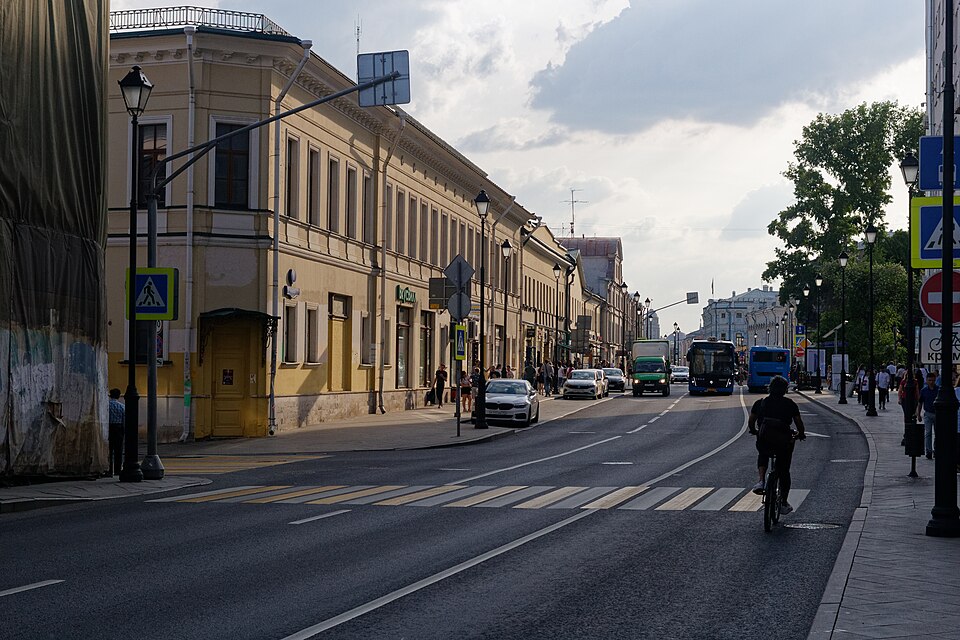
Historically the Old Arbat was a noble street; the Soviet decades turned it into a controlled promenade; the post-1990 rebuild made it pedestrian. The “real” Arbat for Muscovites is often the parallel routes where people still live above ground-floor cafés. After eleven the main strip stays bright while those lanes go quiet, which is when intercom names matter more than landmarks.
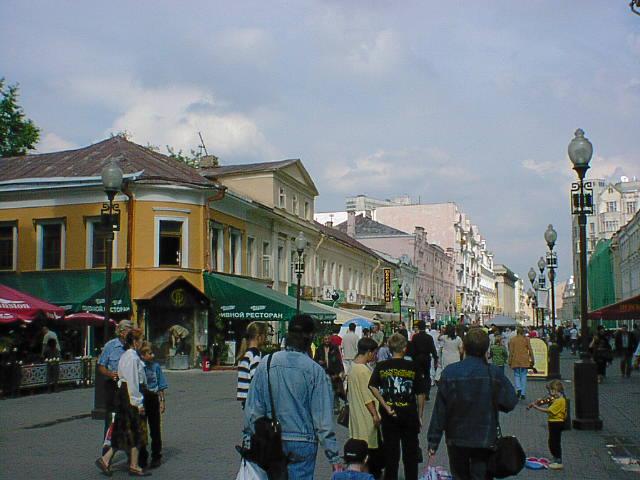
For a guest trying to read modern Moscow, the Arbat is theatre — loud, safe on the surface, disorienting if you treat every arch as the same. Patriarch Ponds are a short walk north and a different tempo. Tverskaya is east: useful for hotels, useless as a vague pin. If the evening includes a show, Taganka after the theatre follows a similar rule — crowd on the main road, address behind it.
Practical habit: finish the stroll, step off the strip, confirm the gate on the phone, then walk the last metres without a visible reservation screen on the pavement. Drivers can drop on a cross street; they cannot hunt for you among the musicians.
Map: Arbat on Google Maps. Also: Moscow Escort.