
Patriarch Ponds after nine still read as a neighbourhood walk, not a hotel district. Bulgakov’s bench and the ring of lamps are on every guidebook cover; what the books skip is how the flats sit one block back, in courtyards that look identical when you leave the pond loop. Guests who say only Patriarch Ponds send drivers to Malaya Bronnaya traffic, not to the arch where the intercom matches the booking.
Patriarch Ponds after nine, one block past the lamps
The ponds were rebuilt in the 2000s into the calm pocket you see now: paths, a few restaurants with terraces, office workers on lunch breaks replaced by couples and dog walkers at night. Malaya Bronnaya and Spiridonyevsky carry the restaurant noise; the lanes toward Tverskaya carry the residential doors. It is closer to Tverskaya side streets than it feels on foot — ten minutes uphill — but psychologically it is another city: less traffic, more staircases.
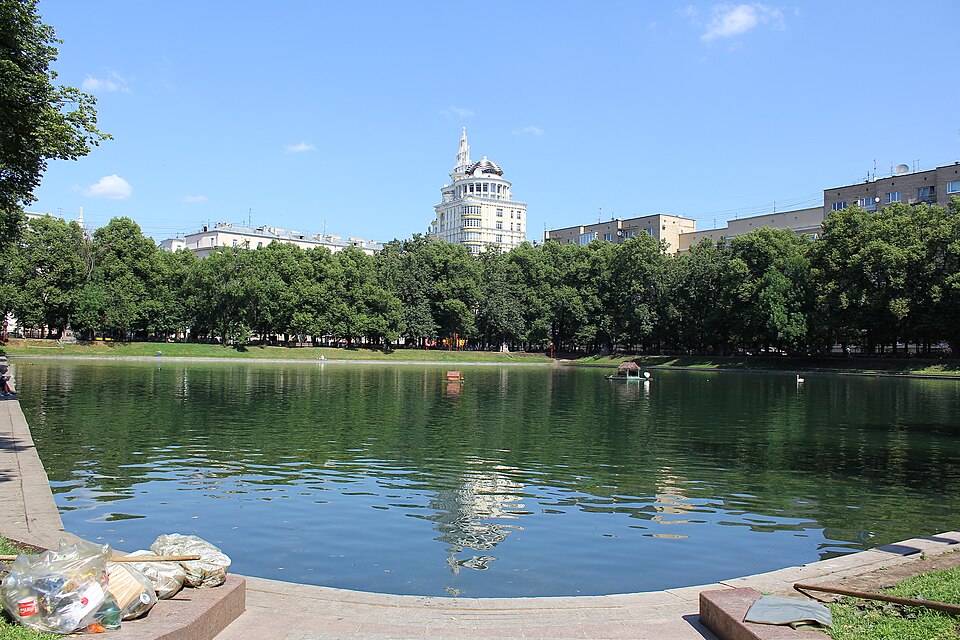
Modern Moscow uses Patriarch as a shorthand for “old money quiet” — boutiques, wine bars, apartments above them. Kitchens here close earlier than on Tverskaya; if dinner runs late on Pokrovka, confirm the flat message before dessert, not when waiters stack chairs. Cars rarely wait on the pond side; name the street beyond the loop where stopping is tolerated for a minute.
Compared with Arbat side streets, Patriarch has no souvenir stalls and fewer tourists, but the courtyard problem is the same: building number, arch colour, intercom label. Police and neighbours know the difference between a walker and someone loitering with a screen; meet inside the gate when you can.
Map: Patriarch Ponds on Google Maps. Also: Moscow Escort.